Your Cart is Empty

Presentation Summary:
We often like to talk about pysanky in the “old times,” but how much do we really know about them and how can we find out more?
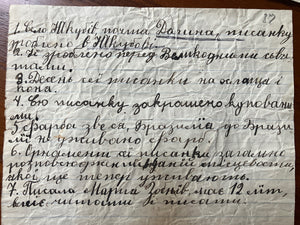
The majority oldest pysanky we have or documented information about them are from the end of 19th – beginning of 20th century. There are several types of sources from which we can learn about these “old” pysanky. These include museum collections and ethnographic publications (about which I presented at UEPR 2024), and archival collections.
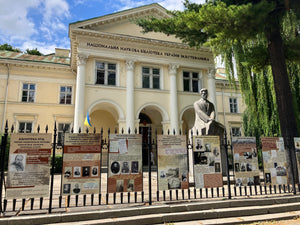
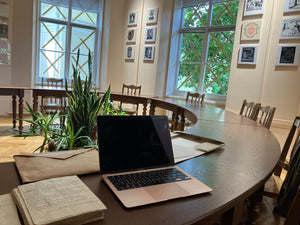
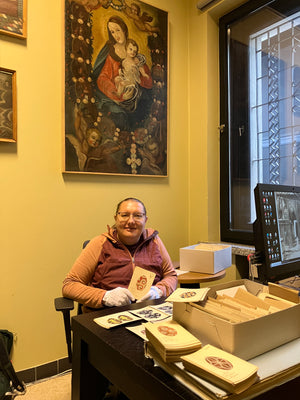
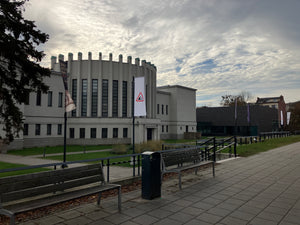
In this presentation I will talk about my experience of doing pysanky research in three archives which also happen to be in three different countries. I will talk about the archives as an institution, about the kinds of information about pysanky one might encounter in the archives, and how this information complements the information from other sources (publications and museum collections). I will talk about the difficulties one might encounter, as well as about the exciting discoveries in the archives.
What to expect:
There will be slides to accompany the presentation, and there will be time for the Q&A.
What to bring:
Nothing is required. You might want to take some notes, or otherwise just listen and enjoy.
Maximum number of participants: no limit.
Presentation fee: $40 CAD per student
Please bring $40 CAD in cash, placed in an envelope with your name and the instructor’s name written on it, to the start of class.
About Mar’yana:
I have been writing pysanky since childhood in Ukraine and then later in Canada. I am particularly interested in traditional pysanky, natural dyes, and in doing academic research on pysanky. I have a PhD in philosophy from York University (2021) and MA in Folkloristics and Applied Heritage Studies from the University of Tartu (2025). My MA project included the remaking of pysanky from the late 19th century catalogue with natural dyes listed in the same catalogue.